How Do Smart Contracts Power Ethereum Casinos?
The convergence of decentralized finance and online gaming has birthed a paradigm shift in digital wagering. At the heart of this revolution lies a formidable piece of cryptographic engineering: the smart contract. For players navigating the dynamic world of **Ethereum casinos** 🎰, understanding the mechanical underpinnings of these self-executing agreements is not merely academic—it is the key to unlocking trustless, transparent, and instantaneous gaming experiences.
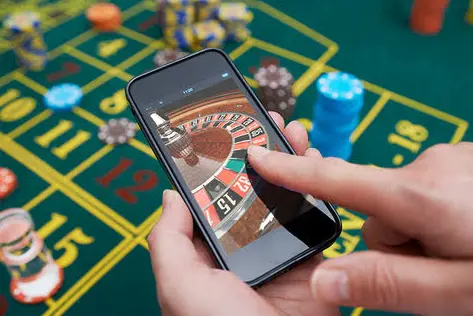
The Immutable Backbone of Decentralized Wagering
Unlike traditional online platforms that rely on opaque server-side logic and third-party audits, an **Ethereum casino** operates on a foundation of immutable code. Smart contracts are autonomous programs deployed on the Ethereum Virtual Machine (EVM) that execute predefined rules without human intervention. When a player initiates a wager, the contract instantly locks the stake, references an oracle for verifiable randomness, and distributes payouts according to algorithmic certainty. This eliminates the counterparty risk inherent in legacy systems where operators could theoretically manipulate outcomes or delay withdrawals.
Provably Fair Architecture and On-Chain RNG
The integration of smart contracts facilitates provably fair gaming through on-chain random number generation. Protocols utilize cryptographic commitments and seed reveals, allowing players to independently verify that each spin, hand, or roll was not tampered with. The contract's bytecode, permanently etched onto the blockchain, serves as an unalterable referee. Every transaction hash becomes a receipt of integrity, transforming the player-operator relationship from one of institutional trust to one of mathematical proof. 🎲

Automated Payouts and Liquidity Pools
Smart contracts revolutionize the financial settlement layer of casino operations. Upon a winning outcome, the contract triggers an atomic transfer from the casino's liquidity pool directly to the player's non-custodial wallet. This process occurs within the same block confirmation, bypassing the withdrawal queues and manual approvals that plague conventional platforms. Furthermore, decentralized liquidity pools enable peer-to-peer wagering, where the contract acts as an escrow agent, ensuring that funds are only released upon the deterministic resolution of the game's logic.
Tokenized Loyalty and Governance Mechanisms
Beyond core gameplay, smart contracts empower a sophisticated tokenized economy. Players can earn fungible or non-fungible tokens representing loyalty rewards, which can be staked or traded on secondary markets. Governance tokens grant holders voting rights on critical parameters such as house edge adjustments, new game listings, and treasury allocation. This creates a self-sustaining ecosystem where the community steers the evolution of the platform, a stark contrast to the unilateral decision-making of centralized entities. 💎
Gas Optimization and Layer-2 Scalability Solutions
While the Ethereum mainnet provides unparalleled security, gas fees and latency have historically posed challenges for high-frequency micro-wagering. The industry has responded with Layer-2 rollups and sidechains that batch transactions while inheriting Ethereum's settlement guarantees. Smart contracts deployed on these scalable frameworks enable near-instantaneous gameplay with negligible transaction costs. This technical evolution ensures that the **Ethereum casino** experience remains competitive with, and ultimately superior to, traditional centralized alternatives.
Security Audits and Formal Verification
Given the high-value assets under management, smart contract security is paramount. Reputable platforms subject their code to rigorous third-party audits and formal verification processes. These assessments identify vulnerabilities such as reentrancy attacks, integer overflows, and oracle manipulation vectors. A battle-tested contract, fortified by time-locked upgrades and multi-signature governance, provides the robust infrastructure required for institutional-grade wagering. The transparency of the blockchain allows any user to inspect the audit trail, fostering an environment of radical accountability.
The Future of Trustless Gaming
As zero-knowledge proofs and account abstraction mature, the synergy between smart contracts and casino gaming will deepen. We anticipate a future where privacy-preserving transactions coexist with verifiable fairness, and where cross-chain interoperability allows a single player profile to traverse multiple ecosystems. The smart contract is not just a tool; it is the foundational protocol upon which the next generation of digital entertainment is being built, promising a world where the house edge is transparent, and the rules are eternally immutable.