Caribbean Stud Raise Fold: When Is It Correct?
The dealer's upcard is a four, your three-card hand is a junk Q-8-3, and the table is screaming at you to stay in. That is exactly the moment Caribbean Stud players bleed money, because the raise-fold decision is not a gut call, it is a cold math problem with a hard threshold. 😤
Most recreational players fold anything below a pair of sevens and raise anything above a pair of tens, splitting the difference on pure feel. That is a losing heuristic. The correct Caribbean Stud raise fold strategy is anchored to a specific expected-value break-even point, and once you understand the dealer qualifying probability and the payout table structure, the fog clears fast.
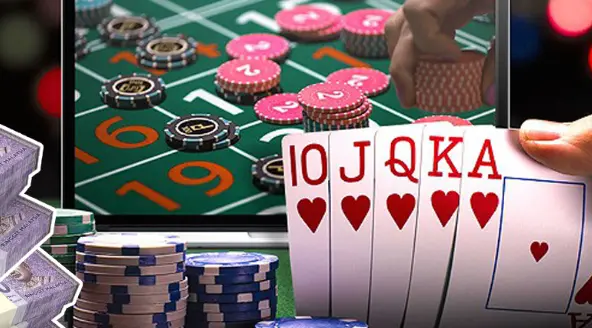
The Real Break-Even Hand Is A-K-J, Not A Pair
Here is the brutal truth the casual crowd never internalizes: the standard raise threshold in Caribbean Stud is any hand of ace-king-jack or better. Not a pair. Not two face cards. The exact spec is A-K-J with the jack as the third kicker, and everything at or above that combination is a mathematical raise. Everything below it is a fold.
Why that specific hand? Because the raise decision hinges on the ratio between your raise wager and the combined ante plus raise payoff against the dealer's qualifying distribution. The dealer fails to qualify roughly 43.7 percent of the time in a standard fifty-two card deck, and when the dealer does not qualify, you collect the ante and your raise comes back untouched. That non-qualifying frequency is the safety net that props up borderline hands, and A-K-J sits precisely at the EV crossover where the fold cost flips negative.
Anything weaker than A-K-J, including small pairs like deuces through sixes, surrenders more expected value than it protects. Players who stubbornly raise with a pair of fours because "a pair is a pair" are donating edge to the house on every single occurrence. 🎯
Why Small Pairs Are A Trap, Not A Comfort
The psychology here is nasty. A low pair feels like a made hand, so the instinct is to protect it with a raise. But run the numbers and the illusion collapses. Against a qualifying dealer, a small pair loses to every higher pair, every two-pair, and every legitimate dealer hand that outranks it, while the payout table offers no bonus tier for that holding. The Caribbean Stud raise strategy punishes sentimentality without mercy.
Compare the small pair to A-K-J. The ace-king-jack high-card hand can still beat a qualifying dealer who shows up with a lower high-card combination, and it blocks nothing the dealer needs. Its equity against the qualifying range is thin but positive at the margin. The small pair has almost no path to victory against a qualified dealer unless the dealer shows up with air, and air does not qualify. That asymmetry is the entire game.
The Dealer Qualifying Factor Changes Everything
Every fold decision must be filtered through the dealer qualification rule, because that rule is the free-roll engine of the wager. When the dealer fails to qualify with ace-king or worse, the hand ends immediately and the player wins the ante regardless of what the player holds. This means weak hands are not as dead as they look, and it means the raise decision is really a bet on how often the dealer qualifies combined with how the raised hand performs when the dealer does qualify.
Fold too aggressively and you forfeit all the non-qualifying wins the ante was designed to harvest. Raise too loosely and you expose the raise wager to a qualifying dealer holding a superior hand. The optimal line threads between those two errors, and the ace-king-jack threshold is the empirical seam. 😎
Payout Table Awareness For The Raise Decision
The bonus payouts for premium hands do not rescue bad raise decisions. A royal flush pays a fortune, but the frequency is so vanishingly small that chasing it with a marginal raise is arithmetically suicidal. The raise decision must be made on the base game equity, not on the lottery-ticket upside of the bonus schedule. Players who conflate the two are the ones the house loves most.
Respect the threshold, respect the dealer qualifying frequency, and treat every borderline hand below ace-king-jack as a disciplined fold. The house edge in Caribbean Stud lives almost entirely in the players who refuse to fold the junk hands and refuse to raise the correct ones, and that edge is 5.22 percent against a player who raises everything and folds nothing.